Can Chickens Eat Bread?
Chickens can eat bread, but it's mostly empty calories. Here's why it fills them up without helping them, and what to offer instead.
Read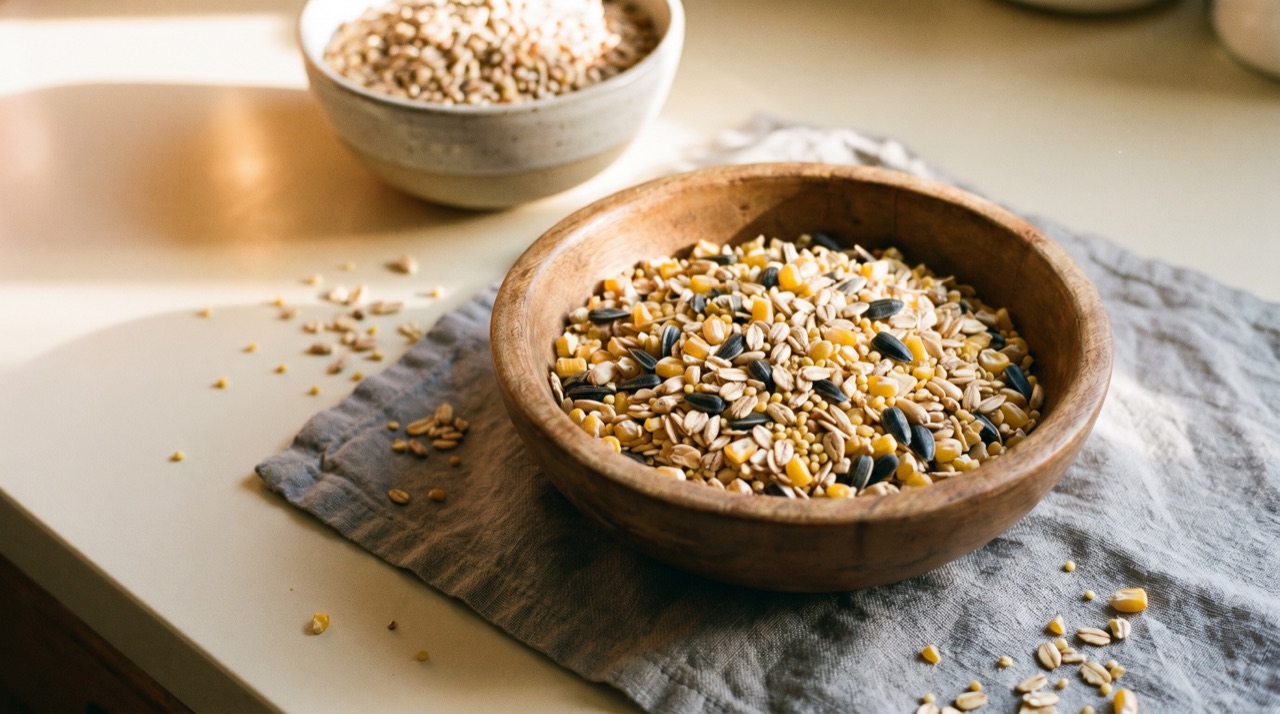
The truth about bread, rice, and other carb-heavy treats.
Grains beyond commercial feed (corn, wheat, oats, rice, barley, scratch mixes) sit in a category that almost everyone gets wrong on first try. Not in a dangerous way. In a "this is actually a treat, not a balanced diet" way. Scratch grains specifically get used as if they were feed, when they're closer to candy with a marketing budget.
This hub is the orientation layer for that distinction. What scratch grains actually are (a treat, not a balanced ration). When they have a real role (cold-weather warming, foraging enrichment, behavior reinforcement). Why they're not a feed substitute (too low in protein, too low in calcium, too unbalanced in micronutrients to keep a laying flock healthy on their own). And which of the common "can chickens eat this carb" questions have answers that depend on form more than on the food itself.
The two posts that cover the most-asked grain questions: Can chickens eat bread, yes in small amounts, no as a daily staple, and there's a moisture-related caveat about wet bread you should know, and Can chickens eat rice, which includes the answer to the rare-but-persistent "raw rice will explode in their stomachs" myth (it won't; cooked is preferred for digestibility, raw is fine in small amounts). The scratch and treats problem post is the one to read if you've been using scratch as feed and your egg numbers or shell quality have been unexplained. It's almost always the same issue.
The "for your flock" part. A flock that gets no scratch grains and a flock that gets scratch every evening look different. Activity level, weight, laying behavior, and time spent foraging all shift based on grain treats, not always in the direction keepers expect. Cold-climate flocks genuinely benefit from a small evening scratch ration in winter (the digestive heat helps overnight body temperature). Hot-climate flocks don't need it and may overheat with too much corn-heavy scratch. Production-focused flocks can lose laying consistency if scratch displaces too much balanced feed. Articles below try to name those tradeoffs instead of treating "give scratch / don't give scratch" as one decision for everyone.
A few practical guardrails most posts skip. Scratch should be sprinkled, not poured. The value is the time spent foraging, not the calories. Scratch is best given late afternoon, after the day's main feed intake, not first thing in the morning when it'll just displace breakfast. Cracked corn alone isn't scratch (it's just one ingredient); look for mixes with at least three to four grains for any actual variety. And no, scratch isn't a feed substitute even when sold in 50-lb bags right next to the layer pellets at Tractor Supply.
If you came here trying to figure out the actual feed question, not the treat question, that's a different conversation. The feeding guides hub is the right next click. Or, if you'd rather jump straight to "what feed should I be using for my specific flock," the feed quiz takes about ninety seconds.
Here's the running list of grain posts.
Chickens can eat bread, but it's mostly empty calories. Here's why it fills them up without helping them, and what to offer instead.
ReadChickens can eat rice — cooked or raw. The old myth about birds and rice isn't true. Here's what to know and how much is fine.
ReadFind your scratch bag. Read the protein percentage on the tag. If it says somewhere between 8 and 10%, that's normal, and it's also why scratch alone can't keep a laying hen healthy. Note the number next to your layer feed protein (typically 16%) and you've now got the math that explains why scratch is the side, not the main.
Get a feeding plan built for your actual hens — not generic advice from the internet.
Take the Feed Quiz60 seconds · Built by keepers, not marketers.