Can Chickens Eat Apples?
Apples are safe for chickens — just remove the seeds first. They contain amygdalin, which breaks down into cyanide. Everything else is fine.
Read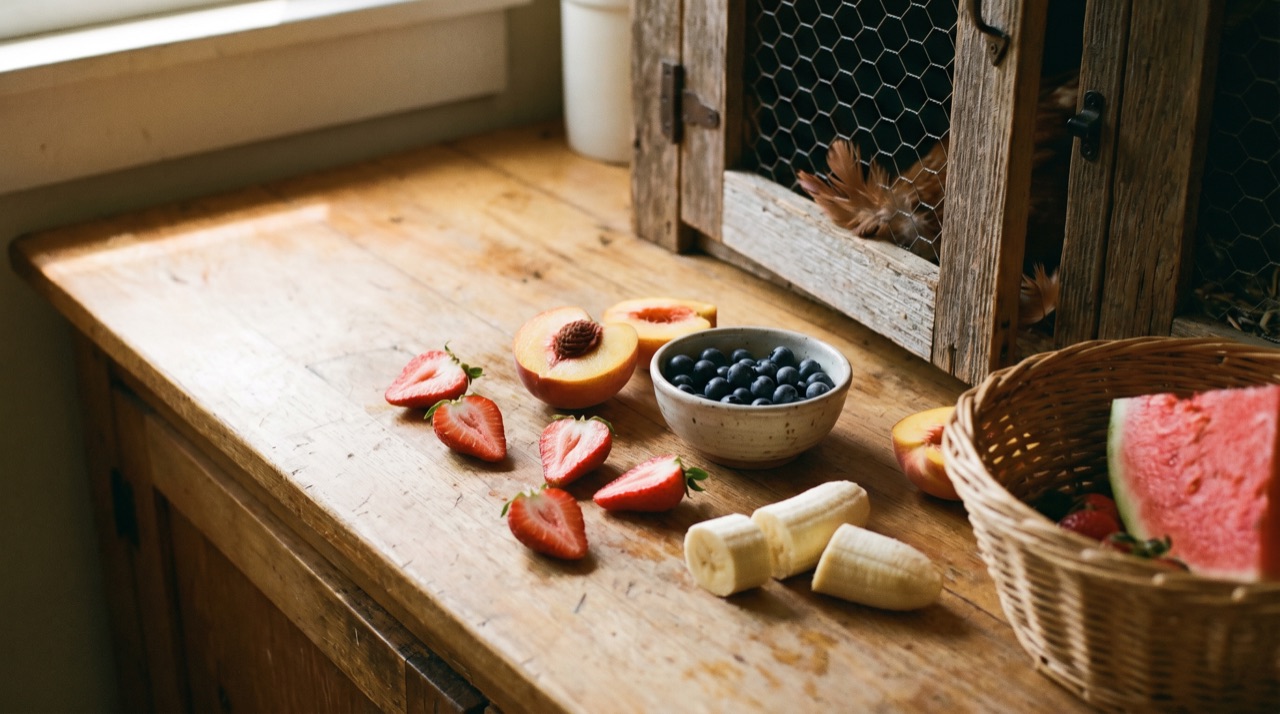
What fruits are safe for your flock — and which ones to skip.
Most fruit is safe, most chickens love it, and most of the "is this OK?" panic is about quantity rather than the food itself. Fruit is a treat, not a feed, meaning the rough rule is keep treats to about 10% of daily intake and let balanced feed do the heavy lifting. Within that frame, fruit is one of the easiest, cheapest, most enthusiastically received treats you can offer.
This hub is the orientation page. Where in the calendar fruits are most useful (summer hydration, winter when greens are scarce), which ones tend to be flock favorites, which ones come with seeds or pits worth knowing about, and which ones, honestly, are probably fine but cause more anxiety than they should.
A few of the most-asked-about fruits we've covered. Strawberries, yes, leaves and all, and they're great for vitamin C. Watermelon, yes, the rind included, and frozen wedges are summer's best treat. Grapes, yes, but cut large grapes for younger birds because choking risk is real. Apples, yes for the flesh, with seeds being one of those technically-contains-cyanide-but-realistically-fine questions we cover in the post. Bananas, absolutely, peel and all, though most flocks pick the flesh first.
The "for your flock" part. Flocks have preferences that nobody who hasn't watched a flock would believe. One coop goes wild for blueberries; the next ignores them entirely. Some flocks eat citrus happily; others won't touch it. Some hens chase bananas; others walk past them. There's no algorithm for predicting it. You find out by watching what disappears first when you put a mixed plate down. The articles below cover what we've learned actually works with our girls, but treat any single recommendation as a starting point rather than a guarantee. Flock-level personalization is real, and trying things in small amounts is how you learn it.
A few patterns worth knowing before you experiment. Berries are usually a hit and pack the most nutritional bang per piece. Stone fruits (peaches, plums, cherries) are fine for the flesh; the pits should go in the compost. Seeds in apples, pears, and similar are fine in the quantities chickens would actually consume from a kitchen scrap; you don't need to deseed before tossing. Citrus is harmless but unloved by most flocks. Anything starting to ferment is worth tasting first. If it tastes alcoholic, skip it (chickens metabolize alcohol slowly and badly).
Cross-references that come up a lot. The safety hub covers the seed-and-pit questions in more depth and includes the actual short list of "do not feed" foods. The vegetables hub handles garden-scrap questions and the leftover-salad version of "can they have this." The grains hub covers the carbier treats (bread, rice, oats) that often get confused with fruit-as-treat in the same conversation.
Here's the running list of fruit posts. If you've already got a specific food on your mind, search for it; otherwise, start with whichever fits the season you're in.
Apples are safe for chickens — just remove the seeds first. They contain amygdalin, which breaks down into cyanide. Everything else is fine.
ReadBananas are safe for chickens — the riper the better. Here's how much to feed, what about the peel, and a winter treat trick.
ReadGrapes are safe for chickens — cut them in half first. Here's how much to feed, why halving matters, and what to watch for.
ReadStrawberries are safe for chickens — leaves, stems, and all. Lower sugar than most fruits. Here's how to offer them and how much is fine.
ReadWatermelon is safe for chickens and genuinely useful in summer heat. Over 90% water, hydrating, and well-loved. Here's how to use it.
ReadWalk to your fridge and look at what fruit is past its prime. Slightly soft strawberries, a banana that's gone too far, melon that's been sliced too long. As long as it's not moldy (truly moldy, not just past pretty), it's flock food, not trash. Sixty seconds of triage saves both food waste and a small grocery line.
Get a feeding plan built for your actual hens — not generic advice from the internet.
Take the Feed Quiz60 seconds · Built by keepers, not marketers.