What Can Chickens Not Eat?
The real danger list is shorter than the internet makes it. Here's what's genuinely toxic, what's fine in small amounts, and the actual rule of thumb.
Read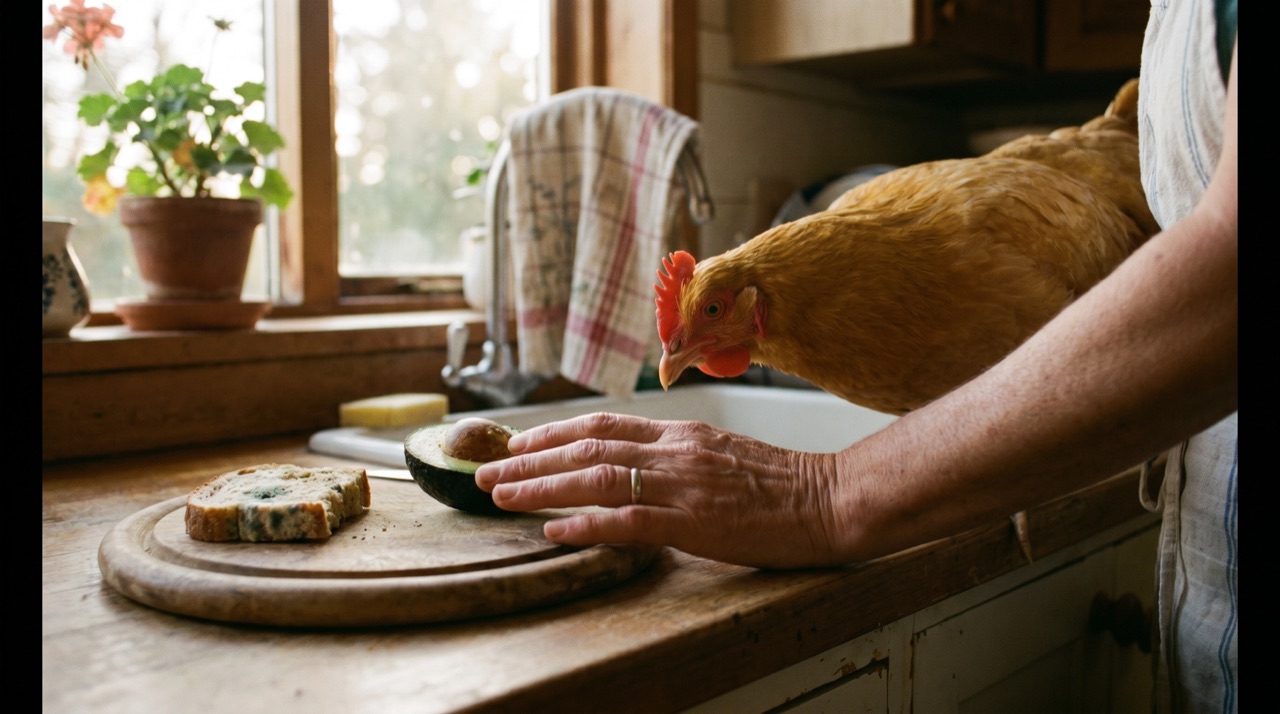
What to keep away from the run — and what's actually fine in small amounts.
The internet's "toxic to chickens" lists are, to put it kindly, padded. Half of what shows up on these lists is people repeating each other without checking. The other half is technically true at doses no chicken would ever eat. Almost none of it distinguishes between "would kill a hen" and "isn't ideal in large amounts daily." The actual short list of things that deserve real caution is shorter than you've been told.
That's what this hub is for. Not a bigger list. A more honest one.
The genuinely risky stuff: avocado pits and skins (the flesh is fine in small amounts), raw or dried beans (toxic until cooked), anything moldy (mycotoxins are a real and serious problem), large quantities of onion or garlic (small amounts are fine and actually beneficial), chocolate, very salty foods, and uncooked rhubarb leaves. That's most of it. Everything else on the standard "do not feed" lists either doesn't apply at realistic doses, depends on form (raw vs. cooked), or is contested by every university extension that has actually studied it. The What can chickens not eat post goes through the full list with the actual evidence, not the recycled forum wisdom.
The "for your flock" part. Risk depends on dose and on what else they're eating. A bite of avocado flesh that fell on the ground isn't an emergency. An entire avocado split with skin and pit absolutely is. A handful of citrus rind once won't hurt anyone. Daily citrus as a treat-time staple isn't great. Most safety questions are really questions about quantity and form, not about whether the food appears on a list. The articles below try to name those distinctions instead of giving you another binary list to memorize.
What we do not do here: cite forum threads or reddit comments as authority on whether something is safe. The information at the heart of this hub comes from university extension publications (Penn State, Mississippi State, Cornell), USDA guidance, and what we've actually fed our girls and watched. When something is genuinely uncertain, and a few things are, we say so instead of making something up. The cost of being wrong on a safety question is too high to wing it.
A few cross-references worth knowing. The vegetables hub has the garden-scrap version of these questions ("can they have the leftover salad? what about wilting greens?"). The fruits hub covers the seed and pit questions ("apple seeds, peach pits, cherry stones, actually risky?"). The grains hub addresses the raw vs. cooked question for things like rice and beans where the form matters more than the food itself. If you've ruled out the danger list and you want help building the rest of the daily diet, the feed quiz is the next stop. Safety is the floor, balanced feeding is the structure on top.
Here's everything we've covered on safety so far. If you've got a specific food on your mind, search for it; if you're orienting to the topic generally, start with the "what can chickens not eat" post and work outward.
Walk to wherever you store treats and scraps for the run. Look for anything that's started to mold, anything past its prime, anything that's been sitting in a bag waiting "until it's enough to take out." If you find something questionable, it goes in the compost pile (which is fenced from the run) or the trash, not into the flock. Three minutes, no purchase, real risk reduction.
Get a feeding plan built for your actual hens — not generic advice from the internet.
Take the Feed Quiz60 seconds · Built by keepers, not marketers.