Can Chickens Eat Tomatoes?
Ripe tomatoes are safe for chickens. Green parts are not — they're nightshades. Here's where the line is and why it matters.
Read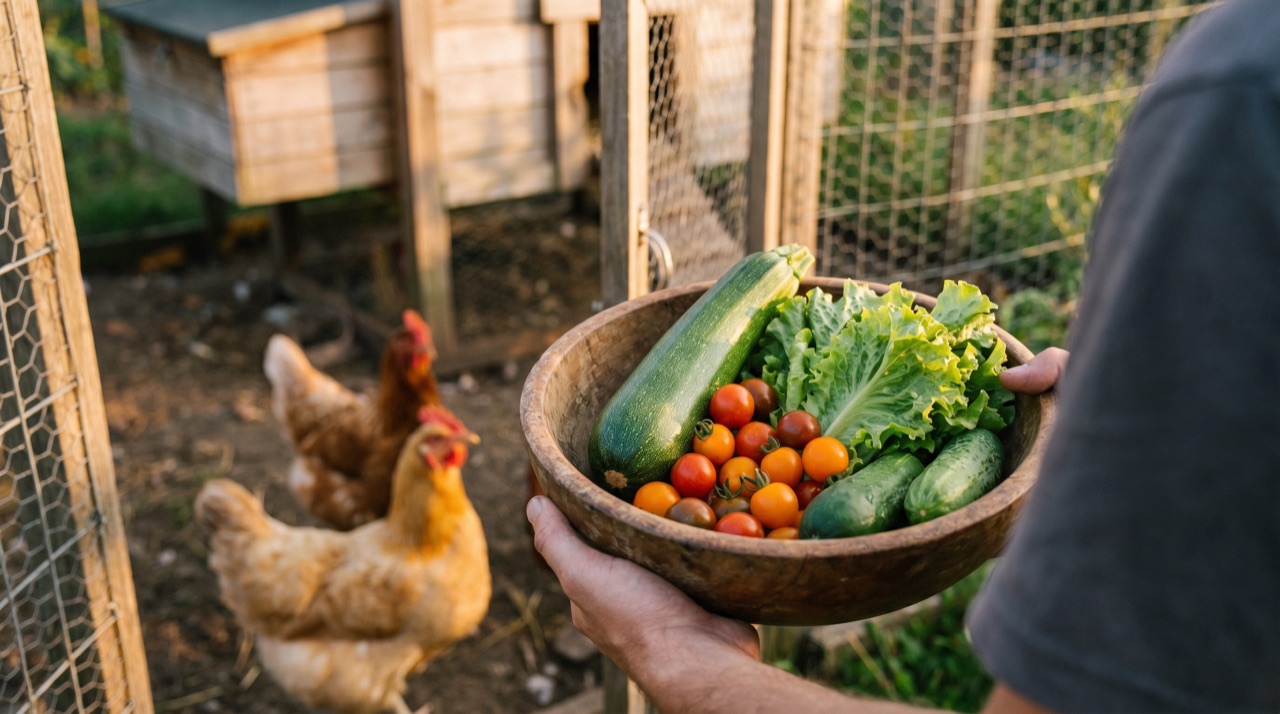
Garden scraps, kitchen trimmings, and what actually belongs in the run.
Vegetables and kitchen scraps are the natural overlap between "we have a garden" or "we cook at home" and "we have chickens." The good news: most of what comes out of either is welcome in the run, often genuinely beneficial, and usually the simplest treat-time decision you'll make all week. The slightly less good news: a few specific things deserve actual caution, and the internet's vegetable advice runs the same problem as its safety advice. Bloated lists where genuine risks get buried in technicalities.
This hub orients you to the practical version. Which garden vegetables and kitchen scraps are basically always-yes (most leafy greens, cooked squash, cucumber, peas, broccoli stems, carrot tops, herbs). Which are mostly-yes-with-a-form-caveat (tomatoes, yes the fruit, no the leaves and stems; potatoes, yes cooked, no green parts or sprouted potatoes). Which are quantity-dependent (onions and garlic, small amounts are actually beneficial, large daily amounts aren't great). And which deserve the short do-not-feed treatment (raw or sprouted potato, green tomato leaves, dried beans, anything moldy).
The post that gets searched most is Can chickens eat tomatoes, which sits in this category mostly because the tomato question is everywhere and the "leaves contain solanine" caveat is genuinely useful. The safety hub covers the broader food risk picture and is the right second stop if your search query was really about whether something is dangerous rather than whether it's a good treat.
The "for your flock" part. The audience for this hub isn't reading abstract "what vegetables can chickens eat" content. They're standing in their kitchen with a colander of zucchini they can't give away, or a bag of bagged salad that's two days past optimal, or three soft tomatoes from the garden that the family won't touch. The real question is "do these go in the run or the compost?" Almost always: the run. Specifically: the run if it's not moldy, not sprouted (potatoes), not heavily salted or oily, and not a known caution food. The articles below try to treat vegetables as the practical garden-to-coop bridge they actually are, not as a textbook list to memorize.
A few patterns worth knowing. Cooked vegetables are easier to digest and break up faster than raw, useful for harder vegetables like winter squash and sweet potato. Leafy greens are nearly always a yes and are some of the best treats for yolk color (those deep orange yolks people show off are partly a function of carotenoid intake from greens). Garden surplus tends to peak right when the run benefits most from variety. Late summer is a great time to outsource your tomato glut and zucchini explosion to the flock. And anything that's wilting or "starting to turn" but not actually moldy is flock food, not trash.
Cross-references. The safety hub is the right next stop for the actual risk list and the dose-and-form caveats. The fruits hub covers the sweeter side of garden treats. The grains hub addresses bread, rice, and other carby kitchen leftovers that often get bundled into the same "kitchen scraps for chickens" conversation. If you'd rather skip the orientation and start with the specific food on your mind, search for it.
Here's the running list of vegetable posts.
Open your fridge crisper drawer and pull out anything that's a day or two past its prime. The lettuce that's getting limp, the carrot tops you weren't going to use, the half-cucumber that's gone slightly soft. As long as nothing's moldy, all of it is run-bound. Two minutes of triage, real food cost reduction, and the flock has a five-minute snack hour.
Get a feeding plan built for your actual hens — not generic advice from the internet.
Take the Feed Quiz60 seconds · Built by keepers, not marketers.